Blues Saraceno the Devil You Know Songs
What does the devil expect like? viii historical images of Satan
From a fallen affections to a bearded, scarlet-hued human with horns, images of Satan have seen the Prince of Darkness' appearance reinvented many times. The satanic figure of today is the consequence of centuries of fine art, literature and theatre, all sculpting a personification of evil.
To observe out what the devil actually looks similar, All About History magazine spoke with Marina Montesano, professor of Medieval History at the University of Messina in Italy, and Jan Machielsen, senior lecturer in Early Modern History at Cardiff University in the UK. Both of these scholars are experts in the history of Satan and the occult.
Here are eight ways that people have pictured Satan through history.
Related: Where did Satan come from?
ane. Aboriginal Hebrew: The serpent
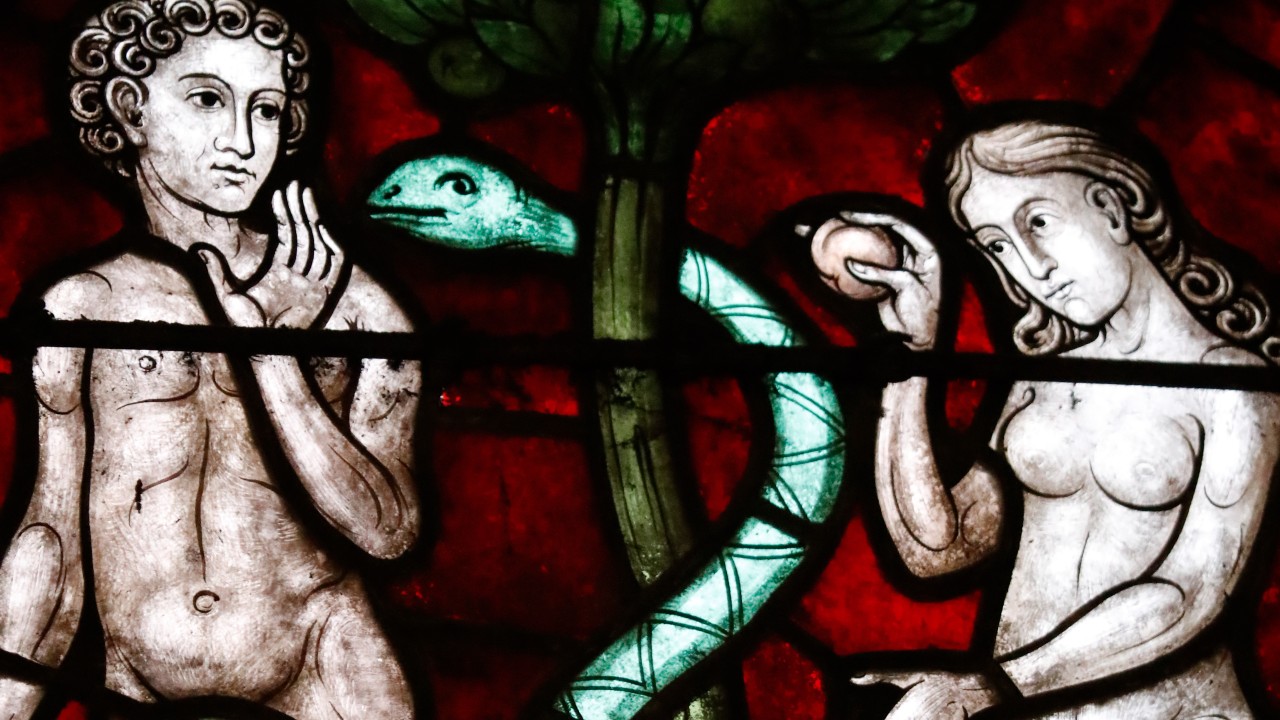
In the Old Testament'south Book of Genesis, the serpent who tempted Adam and Eve with the forbidden fruit in Eden, is ordinarily associated with Satan. In the original Hebrew text, though, no such proper name is given to the creature who convinces them to consume the fruit from the Tree of Knowledge of Skillful and Evil. According to Marina Montesano, the only references to "Satàn" in the Hebrew Bible mean "antagonist," "obstruction" or "enemy" and can refer either to man antagonists or supernatural entities. It is only later, in the New Attestation, that Satan is referred to explicitly as a serpent. Despite this, serpents and snakes remain usually associated with the devil.
two. Early medieval: The fallen angel
In the Bible, the Book of Isaiah fourteen:12 reads: "How art thou fallen from heaven, O Lucifer, son of the morning! How art thou cut down to the ground, which didst weaken the nations." This is a straight reference to God casting out Satan from heaven. "Friction match, the 'morning star' is the expression with which Isaiah defines a future king of Babylon," Montesano said. "The fathers of the early medieval church building, however, elaborated the figure of Lucifer far beyond the biblical text, making him the rebel angel and transforming him into the paradigm of pride every bit the majuscule sin."
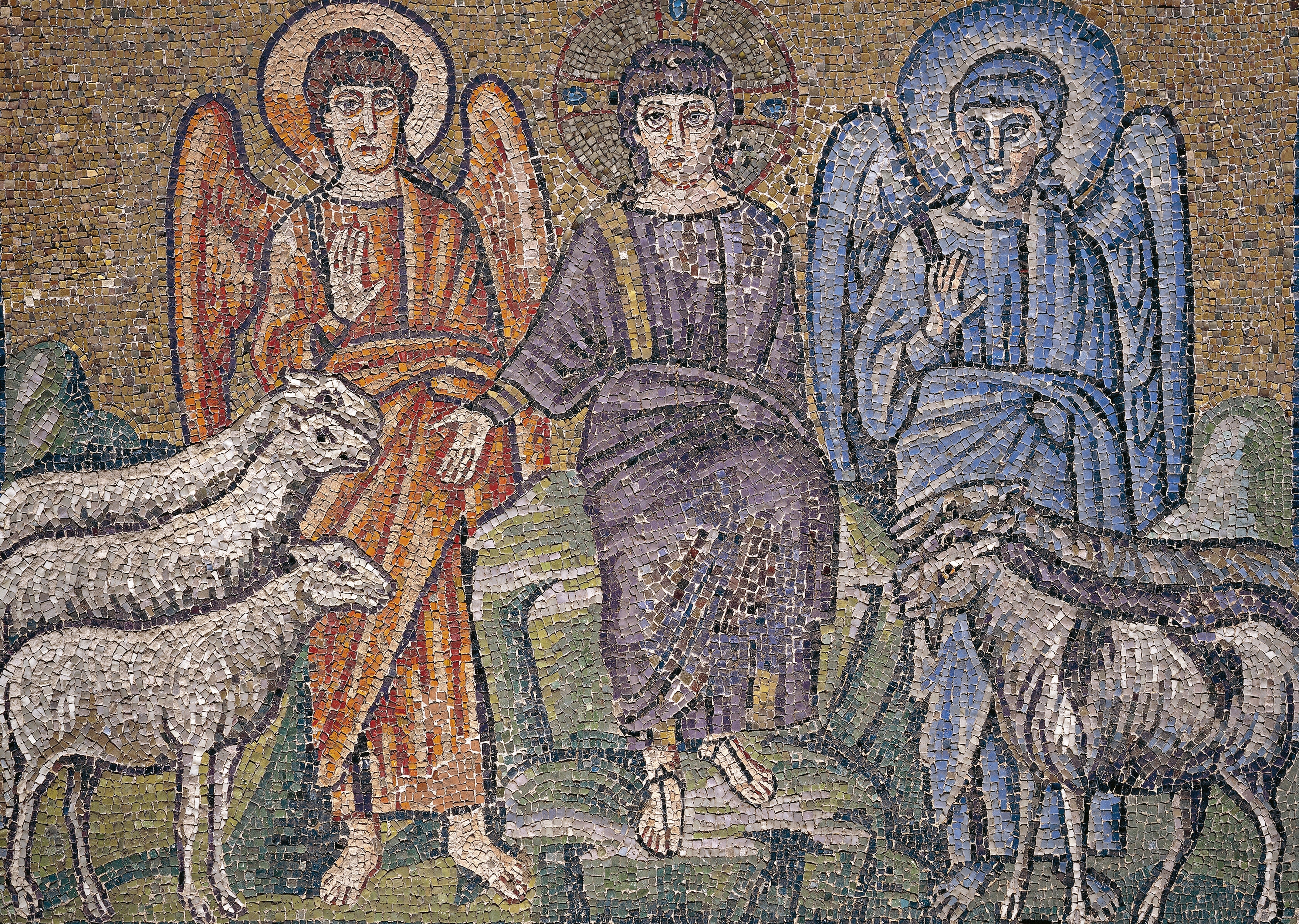
The primeval known suggested depiction of Satan is in a 6th-century mosaic, in the Basilica of Sant'Apollinare Nuovo, Ravenna, Italy. The paradigm "shows the devil equally an ethereal blue affections, [but this was] ultimately shed in favor of a more demonic appearance with animalistic traits," Montesano said.
3. Tardily medieval: Satan as the beast
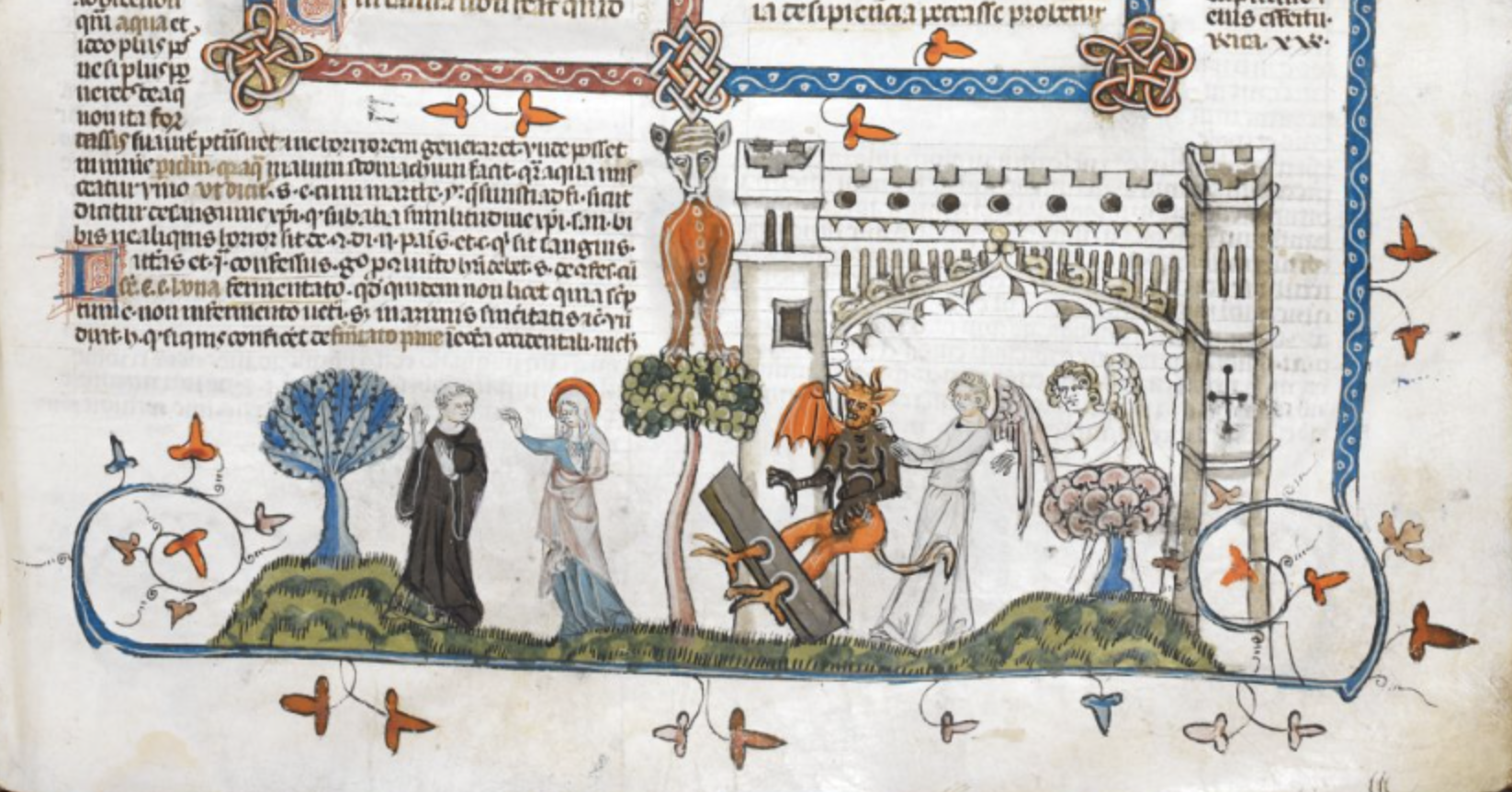
Depictions of the devil during the Medieval period were unremarkably dragon-like, Montesano said. For example, an early pope known as Saint Sylvester reportedly slayed a devilish dragon, impressing a group of pagan priests and confirming the Christian faith of the Roman emperor Constantine, as Hans A. Pohlsander, a professor of classics, explained in "The Emperor Constantine" (Routledge, 2004).
Related: Devil's Nighttime: The history of pre-halloween pranks
However, while mythical creatures were often associated with the devil during the medieval period, and then too were real animals. Co-ordinate to the British Library, many medieval portrayals of the devil accept animalistic features, including the iconic cloven hooves, tails, talons and fifty-fifty webbed hands.
Illustrations from a 14th-century French manuscript called the Smithfield Decretals bear witness the devil with brute body parts, and describe him as a humongous fauna. "Nosotros find [depictions of] foxes, bears, lions and many others having connotations that tin can signify those attributed to the devil," Montesano said.
4. Dante's Inferno: The winged devil
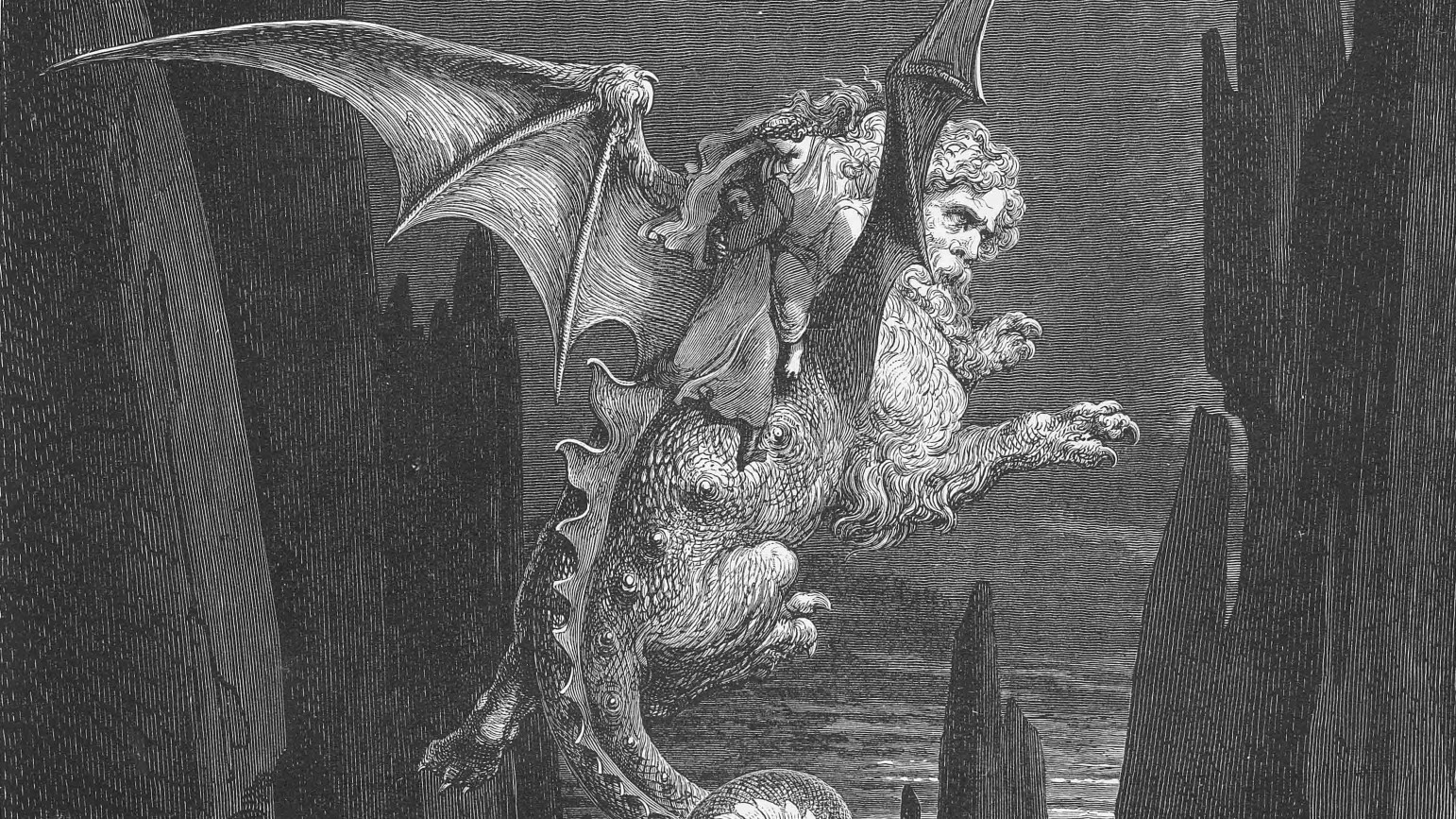
The 14th-century verse form "Inferno," written by Dante Alighieri as office of his "Divine Comedy", recounts a fictional journey through the seven circles that make upwards hell before the protagonist comes face to confront with Satan himself. Dante describes Satan with "two mighty wings, such equally befitting were and so great a bird; sails of the sea I never saw so large. No feathers had they, but as of a bat." (Canto 34: 49-51).
According to Montesano, Satan's wings may originate in Babylonian mythology, due to the devil's clan with the figure of Lilith. "Lilith comes from the ancient Babylonian Lilitu demons: Winged females who flew through the dark, seducing men and attacking pregnant women and infants," she said.
Dante also introduces elements from Greco-Roman mythology into his traditional Christian lore. He refers to the devil as "Dis" and to a "City of Dis", which comes from Dis Pater, the Roman god of the underworld co-ordinate to "The Dante Encyclopedia" (Routledge, 2000) by Richard Lansing, professor of Italian studies and comparative literature at Brandeis Academy. In "Inferno" Dante writes: "Hence in the smallest circle, where the point is Of the Universe, upon which Dis is seated, Whoe'er betrays for ever is consumed." (Canto 11:64-65).
5. Satan with horns
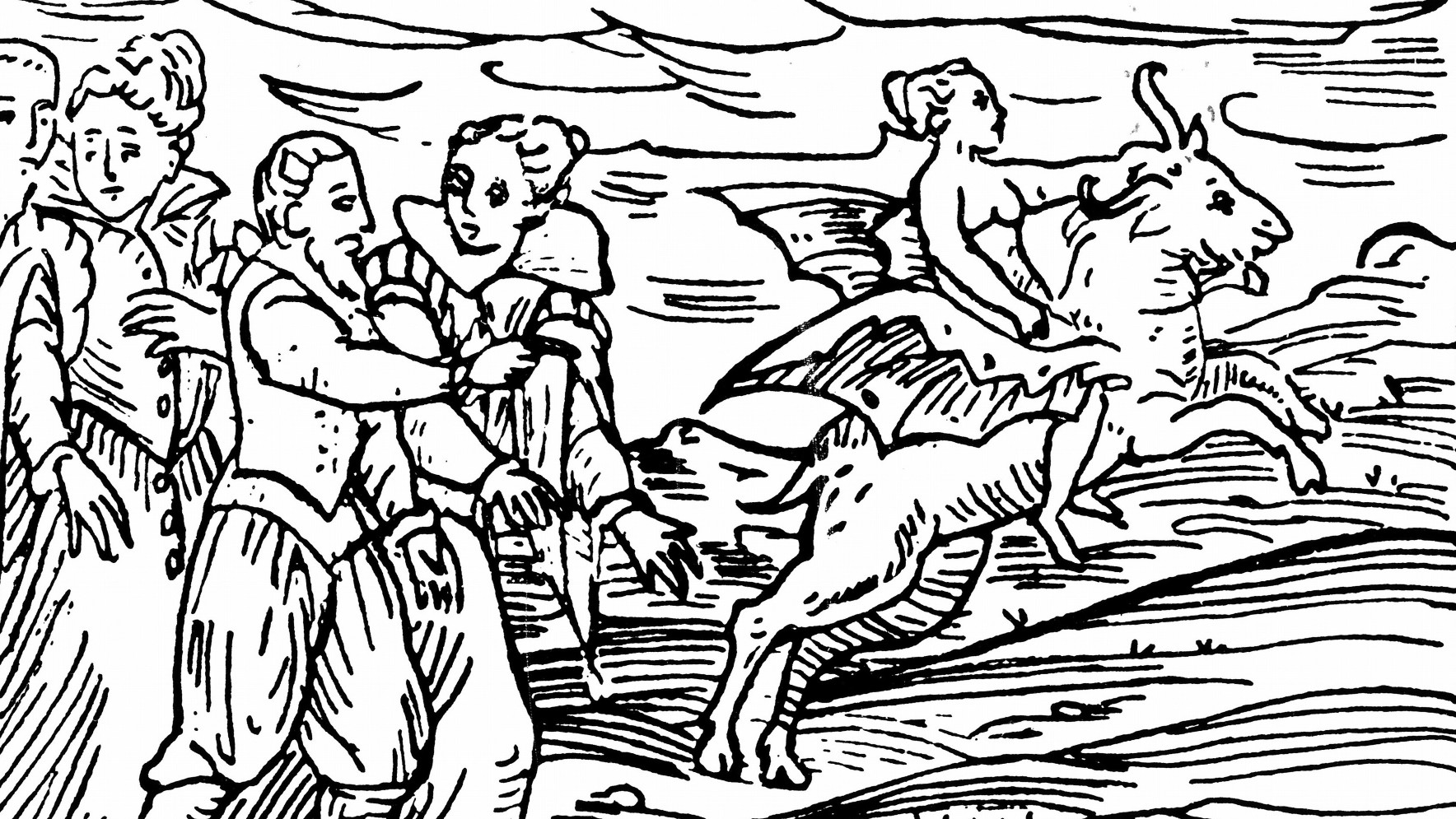
A clear early on link between Satan and goats is found in the Basilica of Sant'Apollinare Nuovo mosaic, constructed in the late 6th century in Italy. In the mosaic, the blue affections to Jesus' left stands behind three goats, while the angel to Jesus' right is joined by three sheep.
The artwork represents a parable in Matthew 25:31-46: "When the Son of Man comes in his glory, and all the angels with him, he will sit on his glorious throne. All the nations volition be gathered before him, and he volition separate the people i from some other as a shepherd separates the sheep from the goats." In the story, the goat is associated with those not inbound heaven. Some art historians, like Alastair Sooke of the BBC, claim that this is where the devil and his minions got their horns.
Related: No sympathy for the devil: Why people fear Satanism
Other experts disagree. "The goat, which until the Middle Ages was barely linked to demonology, assumed a new role [around this time]." Montesano said. "According to some scholars, this new function comes mainly from its association with Nordic myths. Others say it might derive from the infidel god Pan, while British historian Ronald Hutton thinks it has more to do with neo-pagan revival of modern — not Medieval — times."
In his book, "The Devil: Perceptions of Evil from Antiquity to Primitive Christianity" (Cornell University Printing, 1987), Jeffrey Burton Russell claims the link between Satan and the goat derives from the devil's clan with underworld fertility deities, who Christians rejected every bit demons. Along with other pagan gods, these horned idols were particularly feared "because of their association with the wilderness and with sexual frenzy."
six. Paradise Lost: The devil equally an Adonis

Many modern audiences are used to seeing Satan as a chiseled, handsome man, such as in the 2016 Netflix serial "Lucifer". This incarnation of the devil kickoff appeared in the 17th century. In 1667, John Milton published his epic poem "Paradise Lost," which tells the story of Satan's expulsion from heaven and his temptation of Adam and Eve in the Garden of Eden. According to Nancy Rosenfield'southward volume "The Human Satan in Seventeenth-Century Literature" (Ashgate Publishing, Ltd., 2013), Milton shows Satan every bit "a heroic military machine leader," who is "the about attractive of the satanic characters of 17th century literature."
In the 18th and early 19th century, there was a revival of interest in "Paradise Lost." Artist William Blake plant Milton's character of Satan so compelling that he produced several illustrations to accompany a version of "Paradise Lost" in which a nude Satan is shown as a handsome, god-like figure, with entirely human features.
7. A devil dressed in cherry-red
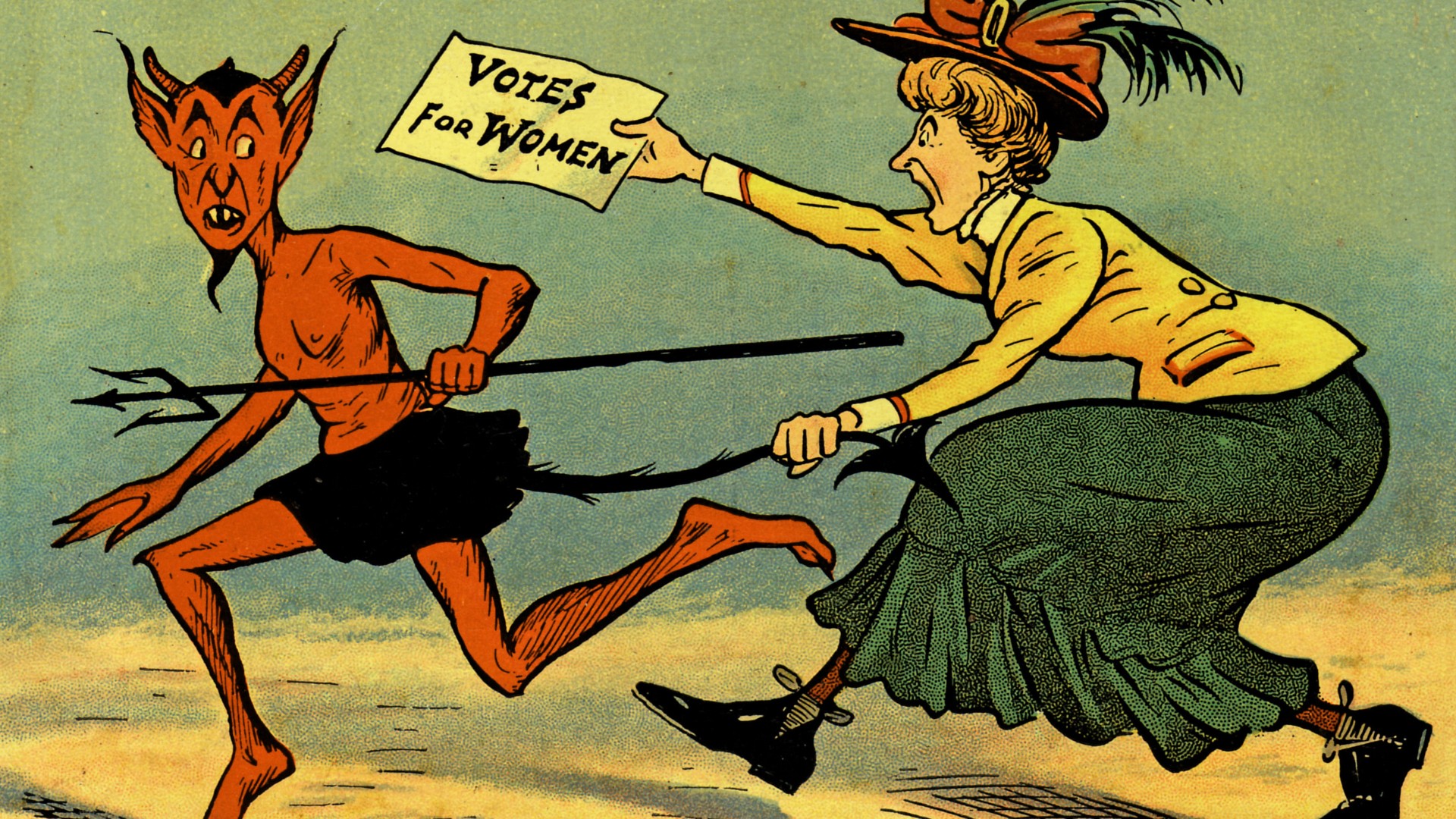
During the 19th and early 20th century the prototype of the devil was used in advertisements and satirical cartoons. In one 1900 drawing, he is being chased away by a women's suffrage apostle. Forth with his horns, he is also entirely cherry-red, with a pointed beard, and carrying a pitchfork.
Related: xx of the near baroque stories from the bible
The devil's reddish tights actually originate in theatre productions. In 1859, composer Charles Gounod adopted the folktale "Faust," which had also inspired Marlowe'south earlier play, "Dr. Faustus," into an opera, in which the devilish character of Mephistopheles wears a Renaissance-era costume, including reddish tights, also known every bit hose.
In his book "A History of Opera: Milestones and Metamorphoses" (Opera Journeys Publishing, 2003), Burton Fisher wrote: "Marcel Journet sang Faust's Mephistopheles over a grand times, providing the stereotyped paradigm of opera characters as devils in ruby-red tights." Different interpretations of this theatrical clothing have endured and remain popular Halloween costumes today.
8. The 20th century devil
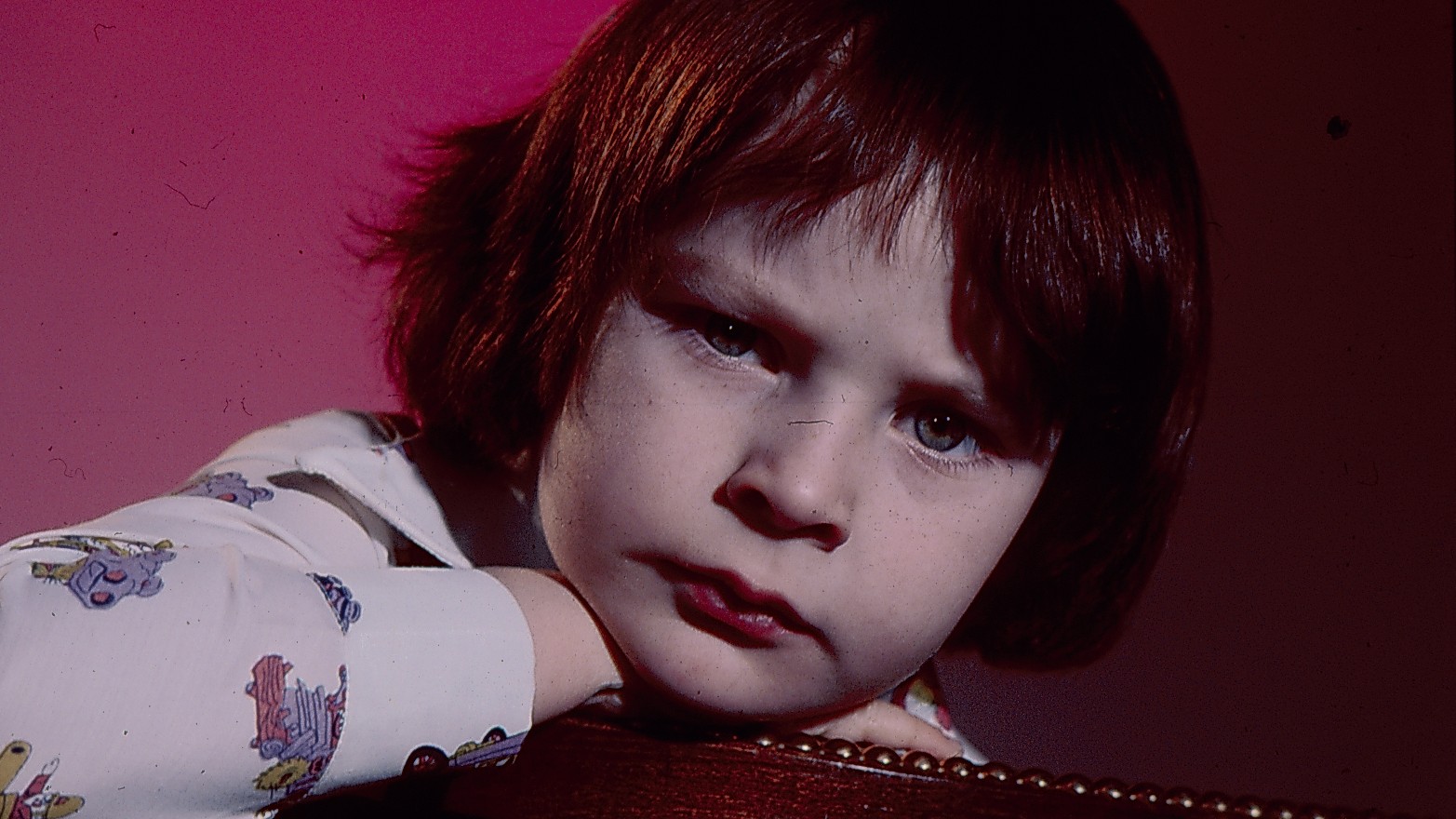
During the 20th century, the devil continued to be re-invented past writers and filmmakers, placing him in the guise of mysterious strangers, smart businessmen and even children, as in the 1976 horror moving picture "The Omen".
In Mikhail Bulgakov'due south novel "The Primary and Margarita" (first published in Moskva magazine, 1966), the devil appears equally a smart just secretive stranger, who is accompanied by a talking cat. Similarly, in the 1987 film "Angel Centre" Robert de Niro plays Louis Cyphre (Lucifer), a well-dressed but ambiguous businessman.
In 1936, the American writer Stephen Vincent Benet wrote "The Devil and Daniel Webster" in which the character Mr. Scratch (Satan) fights for his right to a man's soul in a court of law. In a similar vein, the 1997 moving picture "Devil's Abet" sees Al Pacino play Match as the head of a shady New York City law house.
But even these modern depictions of Lucifer equally a lawyer take their origins in the Middle Ages. In an article from the periodical la Revue de l'histoire des religions, Karl Shoemaker, a historian at the Academy of Wisconsin, Madison, described a medieval court drama in which "the devil and his hellish quango selected a demon learned in the law and sent him to the court of heaven in social club to sue for a legal title to the human race."
This article was adapted from a previous version published in All About History magazine, a Futurity Ltd. publication. To learn more nearly some of history's about incredible stories, subscribe to All About History magazine.
Source: https://www.livescience.com/what-does-the-devil-look-like.html
0 Response to "Blues Saraceno the Devil You Know Songs"
ارسال یک نظر